


In the early 1970s, a decade after its initial bursts of hip cachet and mass popularity, Marvel Comics was, like the rest of the industry, a victim of flat sales. Artist Jack Kirby, the co-creator of the Fantastic Four, the Hulk, Iron Man, Thor, and the X-Men, departed for Marvel’s chief competition, and editor-writer Stan Lee considered leaving the industry. After a sabbatical to work on a screenplay, Lee returned to Marvel Comics, taking on the role of publisher and president when founder Martin Goodman — who’d sold the company to a conglomerate called Cadence Industries — retired. (Goodman’s son Chip stayed behind as editorial director.)
Roy Thomas, Lee’s right-hand man in the office since 1965, took the reins as editor, and presided over a revolving door of new talent who’d grown up absorbing the Marvel style and who were eager for work. What did the company have to lose by letting them take a crack at turning around sales? It was, in a more modest way, a repeat of what Hollywood had been experiencing for a few years, after a conflation of big-budget disasters and the successes of Easy Rider and Bonnie and Clyde convinced the studios that they might as well throw money at scrappy film school graduates and hope for the best. The hard-core comic readers came from all over the country. Among them were Don McGregor, a diminutive, fast-talking, aspiring filmmaker from Rhode Island; Steve Gerber, a chain-smoking Camus obsessive from St. Louis; Gerry Conway, the Brooklyn-born prodigy who’d started writing DC Comics when he was 16; and Steve Englehart, a bearded and bespectacled conscientious objector from Indianapolis.
Change was coming to Marvel Comics.
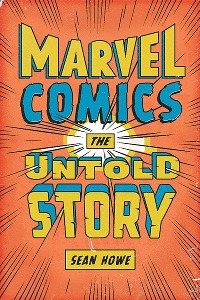
The following is an excerpt of Sean Howe’s book, Marvel Comics: The Untold Story, on sale Tuesday, October 9.
Stan Lee came into the office a few days a week, and still looked at the covers. But when he wasn’t blinking his eyes at balance sheets and charts and annual reports, signing off on thousand-dollar merchandise licensing deals for Marvel characters,1 or getting called into meetings with Cadence chief Sheldon Feinberg, he was speaking at college campuses, or meeting with producers, hoping to get Spider-Man and the Hulk on the big screen. It wasn’t long before he grew tired of all the boardroom stuffiness and realized he didn’t want to remain president.
It was around that time that Albert Einstein Landau came on the scene. The son of Jewish Telegraphic Agency founder Jacob Landau, and the godson of Albert Einstein, Al Landau ran a photo agency and news syndicate called Transworld Features, which had over the years provided material to Martin Goodman’s magazines. Lately he’d been socializing with Chip — they were neighbors on Fire Island — and as soon as Chip introduced him to Feinberg, he worked to ingratiate himself. Landau invited Feinberg to his home for a game of tennis, listed his accomplishments, and proposed ways in which he could improve the business. Perhaps Feinberg saw his own reflection in the short, abrupt, and aggressive Landau. By the time Chip got the news that Stan Lee was stepping down as president, Feinberg had already hired Landau. It was a done deal, and Chip was one step further down the chain of command.
“Chip was very upset about this, as were Martin and Jean,” remembered Chip’s wife, Roberta. “They thought Al was a total bullshitter. He didn’t know anything about the business at all; it wasn’t his background. He’d used Chip as a way to get to Shelly [Feinberg], and snuck in between the two of them.”
Chip’s contract soon expired. The next time that he and Landau had a disagreement, Landau’s solution was clear.
“Do you want to be fired or do you want to quit?” he asked Chip.
Although he was no longer president, Lee remained publisher of Marvel Comics — and, once Chip was gone, publisher of the magazines, too. Increasingly, though, it fell to Roy Thomas to bridge the widening gap between business and editorial interests. One of Thomas’s first responsibilities as the new editor in chief had been to bring further diversification to the Marvel Universe. As the company’s initial attempts to entice a black readership (the Falcon, Luke Cage) sputtered along with middling sales, now a similarly clumsy effort was made to reach female readers, with the launch of three comics ostensibly about feminist empowerment.2 For added authenticity (or gimmickry, depending on one’s level of cynicism), each of the three new titles was to be written by a woman. Unfortunately, there was none presently writing for Marvel, so Thomas improvised. He drafted his wife, Jeanie, Hulk artist Herb Trimpe’s new wife, Linda Fite, and comic conventioneer Phil Seuling’s wife, Carole. Lee came up with all three concepts the same day, and the titles spoke for themselves: Night Nurse, The Claws of the Cat, and Shanna the She-Devil. In the year of Helen Reddy’s “I Am Woman” and the launch of Ms. magazine, Marvel’s tales of candy stripers, cat-suited sexpots, and jungle queens could hardly be called revolutionary.3 (Lee later suggested that the title Night Nurse was a final legacy of his former boss: “Martin Goodman always thought there was something inherently sexy about nurses. I could never get inside his thinking there.”) It was a disappointing lineup from the beginning. For Fite, a former Marvel secretary and the only one of the three with writing experience, the problems began with the name of the series she was writing. “Why do we have to name it The Cat, Roy?” she asked. “Is it a catfight?”
Like Luke Cage, the Cat was subjected to medical experiments that gave her super powers. Instead of just super-strength, though, Greer Grant, formerly a docile homemaker, was given an intensified “women’s intuition.” (Two years later, the character was subjected to radiation, which transformed her into a furry, striped feline named Tigra. Her costume was simply a bikini.) Alas, the message of empowerment was lost on Wally Wood, whom Stan Lee hired to ink the cover of The Cat #1. Wood sent back Marie Severin’s pencil art with the heroine’s clothes completely removed, and Severin — who’d had more than her fill of boys’ club shenanigans over the years — had to white out the Cat’s nipples and pubic hair.
Carole Seuling departed Shanna the She-Devil after only a few months, and Thomas handed the reins to Steve Gerber. By the last issue, it seemed that Gerber was using the comic as a platform to question the point of its own existence. Sprawled on a bed in her leopard-skin bikini, reading from Camus’ The Stranger, Shanna wonders: “What am I doing here — prancing through the jungle like some 1940s B-movie goddess? I came here to escape the city … its violence … its plastic landscape. So what do I do? Build a treehouse to rival the Plaza — foster a teen-age malt-shop relationship with Patrick! It’s too civilized. I should just walk away from it — try living out in the elements — test myself to the limits. At least we’d see if I’m really the superhuman ‘she-devil’ they call me!”
Night Nurse was saddled with its own problems: At the end of October, upon returning from a weekend in Vermont, Jean Thomas told Roy that she was leaving him. The seeds of marital tensions had been sown early the previous year, when Jean was graduating from Hunter College and looking for work. Lee dangled the idea of a secretarial job and then quickly withdrew the offer. “There were some people at Marvel, never totally revealed to me, who’d felt she’d be a ‘spy’ for me on the couple of days I wrote at home, so she was frozen out,” said Thomas. “Jeanie felt I should’ve quit. But I had wanted to defer the decision till I’d talked it over with her, and by that time my moment to ‘play hero’ had passed. I guess, in her mind, I had failed the test by not standing up for her.” And in Thomas’s mind, his coworkers had failed the test of loyalty. The bloom was off the rose. His feelings about Marvel would never fully recover.
Within nine months, all three of the distaff titles had gotten the ax. “It’s kind of a shame,” Thomas lamented. “You could get blacks to buy comics about whites, but it was hard to get whites to buy comics in which the main character was black. And it was even harder to get boys to buy comics about women.”4 After the initial campaign had failed, the female characters that were introduced in the pages of other titles — Thundra, an angry Femizon in The Fantastic Four; Mantis, a Vietnamese ex-prostitute in The Avengers; and, in Marvel Team-Up, a villainess named Man-Killer — seemed unlikely to emerge as role models.5
Nonetheless, the mandate was to go for “minority” appeal, so in the summer of 1973, as the last issues of Night Nurse and The Cat slunk quietly from the newsstands, they were quickly replaced by redoubled efforts toward a surge in blackness. Luke Cage became a high-profile guest star in Amazing Spider-Man, while in his own title, Marvel delicately reported, “much of Cage’s jivin’ slang will be eliminated.” African-American bad girl Nightshade battled Captain America and the Falcon; Jim Wilson returned to the pages of The Incredible Hulk. For Tomb of Dracula, Marv Wolfman dusted off Blade, a black tinted-goggles-and-bandolier-sporting vampire hunter he’d conceived in the 1960s.6 The biracial buddy western comic Reno Jones and Kid Cassidy: Gunhawks became Reno Jones, Gunhawk when the white half of the team was murdered. The final issues of Shanna the She-Devil introduced Nekra, a mutant albino daughter born to an African-American cleaning lady; her criminality was, unsurprisingly, tied up with heavy identity issues. Other new black characters were filtered through the scrim of international exoticism: In Supernatural Thrillers, Steve Gerber and Rich Buckler introduced N’Kantu, the Living Mummy; Len Wein and John Romita’s Haitian witch doctor Brother Voodoo began starring in Strange Tales; and Don McGregor and Rich Buckler brought Black Panther back to his native Wakanda in Jungle Action, a title previously devoted to reprints of white imperialist fantasies from the 1950s.
McGregor had been at his proofreading job for a few months, waiting for a chance at writing a title. One that regularly landed on his desk made him wince. “At that time,” he said, “Jungle Action was basically blond jungle gods and goddesses saving the native populace from whatever threat. It was pretty racist stuff, and I couldn’t believe Marvel was publishing it.” And then suddenly, he was informed that the twenty-year-old potboilers starring Lo-Zar, Tharn the Magnificent, and Jann of the Jungle would be replaced. Jungle Action would now run new adventures of the Black Panther in his native African country of Wakanda — and McGregor would be the writer. “Jungle books didn’t sell. I think they figured, ‘Well, we’ll give Don a jungle book, it’ll die and we’ll have given him a chance.’ ”
But the disregarded Jungle Action turned out to be the perfect venue for McGregor’s idiosyncratic vision — because it was a lower-tier book, no higher-ups were looking at his work until it was just about out the door, too close to deadline for major changes. With artist Rich Buckler (later replaced by the African-American Billy Graham), McGregor immediately embarked on a dense, thirteen-chapter saga called “Panther’s Rage,” in which the Black Panther’s alter ego, T’Challa, returns to his homeland and faces revolting countrymen who see him as a sellout for hanging out with the Avengers.
Only two years earlier, in an issue of The Fantastic Four, Marvel briefly tried to put distance between the Black Panther and his politically charged namesakes by renaming him Black Leopard. “I neither condemn nor condone those who have taken up the name,” T’Challa told the Thing, in a carefully measured bit of expository dialogue. Now McGregor edged the character further into political territory than ever before, and tackled issues of masculinity and patriotism. The gold-chain outfit that T’Challa sometimes paraded around in recalled Isaac Hayes’s Wattstax getup, but that had more to do with black America’s trendy early 1970s appropriation of traditional African garb than with Jungle Action becoming one more winking blaxploitation farce. McGregor invested deeply in his characters; the gravitas (and extreme wordiness) that he brought to the comic was typified by the description of the Panther’s American girlfriend, Monica Lynne (“once she was a songstress … a minor-grade Aretha Franklin … and more recently she spent her days as a social worker … until the words of this quiet, eloquent man convinced her she might learn more about different lifestyles and herself here in this jungle paradise”). But McGregor could also have fun: corralling generous volunteers from the Bullpen, he filled out the back of the book with maps, pinup galleries, and text pieces — otherwise, he knew, that space would be tainted by reprints of the old jungle strips.
The characteristic that most immediately set Jungle Action apart, however, was McGregor’s resistance to including white supporting characters, including superhero guest stars. “My feeling was, ‘You’re dealing with an isolated, hidden African culture. So where were these white people supposed to come from?’ ” It was the only mainstream American comic book to feature an all-black cast. When the book’s sales remained low, that was not a distinction that Marvel had much use for. For a while, though, McGregor’s staff position afforded him an extra advantage in greasing the editorial wheels. He even had a deal with his fellow proofreader, Steve Gerber: “You don’t edit my books,” McGregor said, “and I won’t edit yours.”
Steve Gerber gladly accepted the offer. He was happy not to be edited; he was virtually unable to work from a staid template. “Oh, great!” he had a teenager snap in the first Marvel comic he wrote. “It’s those guys who were bothering us at the head shop!” Dialogue like that never would have made its way into Spider-Man. Gerber got his start toiling in the horror genre, which he found “a crashing bore,” but working on the nonsuperhero periphery enabled him to experiment. The tagline for Adventures into Fear — “Whatever knows fear … burns at the touch of the Man-Thing!” — summed up the extent of motivation for its protagonist, a personality-free monster that simply wandered around the swamps of Citrusville, Florida, causing agony to frightened individuals. So when the title was assigned to Gerber, he was forced to look elsewhere for characterization. After establishing that the Citrusville swamp was the “Crossroads of the Universe,” he went about building an extensive, and increasingly bizarre, supporting cast: teenagers Jennifer and Andrew Kale; their grandfather Joshua, who belonged to an Atlantean-worshipping cult called Zhered-Na; a sorcerer named Dakimh; a crew of angry construction workers; and Korrek, a barbarian who emerged from a jar of peanut butter. There was Wundarr, a send-up of Superman so dead-on that DC threatened to sue (Lee, frustrated, nearly removed Gerber from the book). And there was a talking duck named Howard, whom Gerber would later describe as having come to him in a trance as he typed at his home in Brooklyn, the sounds of a salsa record wafting from a neighbor’s apartment.
Amazingly, this was all conceived without the help of psychedelics. “He was one of those guys who was militant about not altering his consciousness,” said Steve Englehart. “Gerber’s weirdness came directly from his id.” In his early twenties, in St. Louis, Gerber had been on the sidelines of hippie culture, an observer. “I was always too academic, too conscientiously critical, to throw myself into it totally. There seemed to be a certain shallowness of philosophy, somehow, and beyond that, even, there was a lot of violence associated with that culture.” This outsider perspective meant that no ideology, left, right, or center, was safe. The Foolkiller, religious-nut vigilante with a “ray of purity” gun; Holden Crane, an obnoxious, rhetoric-spewing student radical; and F. A. Schist, a money-grubbing industrialist — they each met an early doom at Gerber’s hands. Where McGregor’s writing was passionately serious, Gerber was a born satirist, almost helplessly lampooning every segment of the population. Filling in on an issue of Captain America, he created the Viper, a bad guy whose day job in advertising had left him bitter. “For years,” shouted the Viper, “I labored in anonymity, selling other men’s products, making other men’s fortunes — laying waste to the values and environment of a nation from the privacy of my office … now I’ve left that grey flannel world behind!” After all the relentlessly earnest civic lectures of the past few years, readers encountering Gerber’s weird societal critiques were inclined to do a double take — was this for real?
Before long, he was trying his hand at Iron Man and the Sub-Mariner, and Daredevil, where one story line featured Rolling Stone editor Jann Wenner and an angry-hippie villain named Angar who blasted people with bad trips and primal screams. In Marvel Two-in-One, a series that teamed the Thing with various guest stars, Gerber demonstrated that he’d staked out his own corner of the Marvel universe, where he could have Daredevil and Wundarr coexist. Still, Gerber was at his best when he was freed from the constraints of closely watched properties.
When it became clear that Gerber would make a better full-time freelance writer than staffer — his sleep apnea led to restless nights, and so he regularly dozed off at his desk — McGregor welcomed a revolving door of proofreading partners: first Tony Isabella, and then Doug Moench, from Chicago, and then David Anthony Kraft, a seventeen-year-old from Georgia.7 Each of them was a writer as well, and each of them shared an understanding: you leave alone my stuff, and I’ll leave alone yours.

Roy Thomas’s hands-off, see-what-sticks approach had ushered in Marvel’s most unpredictable — and often downright subversive — era. Young creators, eager to refract the superhero world through a prism of boomer values, kept parading through. “It wasn’t a corporate environment,” said one former Cadence Industries lawyer who’d occasionally visit the offices. “I remember stepping over people sitting in the hall, smoking pot, ‘getting inspiration.’ ”
Artist Jim Starlin, a Detroit-raised greaser and Vietnam veteran who’d survived a helicopter crash in Sicily and explosions in Southeast Asia, created unsmiling, violent superheroes as a form of “anger management” and stuck them in his freelance work. Steve Englehart, who’d buried his best friend from basic training, marinated the stories he wrote in lefty politics. Where Stan Lee, a master fence-sitter, had managed to always stake out a safe middle ground, Starlin, Englehart, and their peers couldn’t help but have stronger, and angrier, convictions.
Of course, the new guys weren’t going to be allowed anywhere near Amazing Spider-Man or Fantastic Four or The Incredible Hulk or The Mighty Thor — those best-selling titles were reserved for Thomas himself, or for wunderkind Gerry Conway. Those comics were going to stick to their formulas, professionally executed to the point of monotony — and there was no longer any doubt that that was exactly how Stan wanted it. Conway learned this the hard way.
Casting for a way to shake up Amazing Spider-Man, Thomas and Conway had discussed the idea of killing off a member of the supporting cast. Aunt May — elderly, generically kindly, and seemingly always at death’s door anyway — was the logical nominee. But when John Romita got wind of the plans, he suggested a different victim: Peter Parker’s girlfriend, the lovely Gwen Stacy. Conway thought it was a stroke of genius.
“She was a nonentity, a pretty face,” he said. “She brought nothing to the mix. It made no sense to me that Peter Parker would end up with a babe like that who had no problems. Only a damaged person would end up with a damaged guy like Peter Parker. And Gwen Stacy was perfect! It was basically Stan fulfilling Stan’s own fantasy. Stan married a woman who was pretty much a babe — Joan Lee was a very attractive blond who was obviously Stan’s ideal female. And I think Gwen was simply Stan replicating his wife, just like Sue Storm was a replication of his wife. And that’s where his blind spot was. The amazing thing was that he created a character like Mary Jane Watson, who was probably the most interesting female character in comics, and he never used her to the extent that he could have. Instead of Peter Parker’s girlfriend, he made her Peter Parker’s best friend’s girlfriend. Which is so wrong, and so stupid, and such a waste. So killing Gwen was a totally logical if not inevitable choice.”
Thomas then cleared the plans with Lee. “He was okay with it to the extent that Stan paid attention to anything,” said Conway. “At that time he was primarily interested in expanding the line, asserting his authority as publisher to the higher-ups that owned Marvel, and promoting his own brand and his own career. Once he stopped writing a given comic he stopped thinking about it. And so when he stopped writing Spider-Man, even though he had a proprietary interest in it, really, it was ‘Yeah, whatever you want to do.’ ”
Conway, Romita, and Gil Kane worked out a story in which Green Goblin kidnapped Gwen Stacy and threw her off the top of the George Washington Bridge; in a perverse twist, someone added a “snap!” to the panel in which Spider-Man’s web catches Gwen, implying that it was not the fall but whiplash from the catch that caused her neck to snap, that Spider-Man was implicated in the death.
The readership started hyperventilating as soon as the issue hit stands.
“Stan didn’t think about it until he went to a college campus and got yelled at by fans,” Conway said. “Instead of acting like he was in charge, he said, ‘Oh, they must have done it while I was out of town — I would never have done that!’ The pretty horrendous backlash that I received from the fan press, and the lack of support I got from Stan, who said we did it behind his back, had a huge impact on me in terms of my emotional state. He basically threw me to the wolves. This was the first time a beloved character had been killed off in comics. I couldn’t go to conventions.”
“The idea that the three of us together, or even separately, would have tried to sneak in the death of Gwen Stacy without Stan approving it is just so absurd,” said Roy Thomas. “Besides, he was never out of town that long.” It came back to what Stan had told Roy Thomas, years before: he didn’t want to fix what wasn’t broken; he only wanted “the illusion of change.”
During a speaking engagement at Penn State, Lee was again surprised to learn of a character death; this time, Len Wein had killed a member of The Incredible Hulk‘s supporting cast. “I told them not to kill too many people,” Lee assured the crowd, and promised that Gwen Stacy would return.
Just as Conway was getting used to the idea that he couldn’t tweak Marvel’s intellectual property, he was also asked to whip up some merchandising synergy. After toy company Azrak-Hamway offered Marvel a licensing deal for a Spider-Man car, Lee handed down a decree to create something called the Spider-Mobile. Conway thought the idea was ridiculous. Why have a hero who could swing through the city on webs get stuck in New York City traffic? In Amazing Spider-Man #126, Conway, annoyed, had a pair of sleazy suits approach Spider-Man and ask him to drive their prototype, for publicity. They looked a little bit like Lee and Thomas, and the address on the business card they handed Spider-Man was 575 Madison Avenue — Marvel’s address.
Conway had hardly been the picture of the rebel — while Jim Starlin and Steve Englehart were trying to translate their psychedelic experiences into four-color adventures, Conway blamed Norman Osborn’s relapse into his Green Goblin identity (and his subsequent murder of Gwen Stacy) on his son Harry’s bad LSD trips. But Conway began sliding a patina of political content into his work. Drawing inspiration from Don Pendleton’s popular Executioner novels, Conway created a new character called the Punisher. Like Pendleton’s Mack Bolan, the Punisher was a Vietnam War veteran who exacted revenge on the mob after it murdered members of his family. But where Bolan — lusty, unrepentantly vicious, and charmless — was cast as a hero, Conway framed the Punisher as a paranoid and dangerous, if somewhat sympathetic, antagonist. It was the vigilante adventure as cautionary tale.
Conway reserved his greatest scorn not for Doctor Octopus or the Kingpin but for newly created bad guys who’d sold out their left-wing compatriots, like Ethiopian supervillain Moses Magnum (who, a caption revealed, had once made a deal with Mussolini), the onetime South American revolutionary known as the Tarantula (who betrayed his fellow rebels to a dictator’s army), and the French villain Cyclone, a NATO engineer who’d begun developing weapons on the side.
These flourishes may have sailed over the heads of Spider-Man‘s adolescent readership. But soon after Stan Lee rapped his knuckles for writing Gwen Stacy’s death, the twenty-year-old Conway found the next-best way to traumatize legions of twelve-year-olds, this time in the pages of The Fantastic Four: divorce proceedings for Reed and Sue Storm. Decades later, novelist Rick Moody would describe the story line in The Ice Storm, his roman à clef about familial disintegration: “Sue Richards, née Storm, the Invisible Girl, had been estranged from her husband, Reed Richards. With Franklin, their mysteriously equipped son, she was in seclusion in the country. She would return only when Reed learned to understand the obligations of family, those paramount bonds that lay beneath the surface of his work.”8 (They would later reconcile.)

Just as the furor of Gwen Stacy was starting to die down, Roy Thomas saw Howard, the talking duck that Gerber and artist Val Mayerik had placed in Adventure into Fear. The book’s scary vibe, he thought, was compromised by the inclusion of a funny animal. “Get it out of there as fast as you can,” he told Gerber. In his next appearance, Howard made a clumsy step off a rock and fell into oblivion.
The fans reacted instantly. “The office was flooded with letters,” Gerber recalled. “There was the one wacko who sent a duck carcass from Canada, saying, ‘Murderers, how dare you kill off this duck?’ There was the incident at a San Diego Comics Convention where somebody asked Roy whether Howard would ever be coming back, and the entire auditorium stood up and applauded. Stan was being asked about it every place he went on the college circuit.”9
This time, the fans were on the side of the writer. Marvel would bring Howard back.
“I don’t have time to edit,” Roy had told Steve Englehart on an early assignment, “so we’re hiring you to write this book. If you can turn it in on time and can make it sell, you can keep doing it. If you can’t, then we’ll fire you and hire somebody else.”
In this sink-or-swim spirit, Jim Starlin was tapped to plot and draw an issue of Iron Man, a comic that his roommate, Mike Friedrich, had been writing for six months. Figuring he might never get another shot, he convinced Friedrich that they should stuff the issue with the characters Starlin had dreamed up while taking psych classes at a Detroit community college after his Navy stint.10 Thomas was pleased, and paired Starlin with Steve Gerber for the following issue; however, Lee happened to see that story, deemed the results terrible, and immediately removed Starlin from the title. Then Starlin and Alan Weiss were offered a quick-turnaround art job on the final issue of The Claws of the Cat. For two days, Starlin’s girlfriend kept them supplied with wine and pot; in a celebratory mood, they filled the margins with smart-alecky comments and in-jokes. By the night before deadline, though, the fading duo had to recruit a third artist, who snuck in his own unsolicited suggestion to the narration: The Cat gets an ovarian cyst! After the pages came back to Linda Fite to add her dialogue, she went straight to Lee and complained. The next day, Starlin got an angry call from the office.
But Thomas thought Starlin had promise. He offered him a chance to work on Captain Marvel, a faltering title that Thomas had written himself, before editorial duties pulled him away. The conveniently named Mar-Vell, a warrior of the alien Kree race, had defied his own people to protect Earth; now he worked in tandem with Rick Jones, the former teenage sidekick to the Hulk, who had blossomed into an annoying wannabe rock star. The characters had agonizingly bland personalities — but that turned out to be just the blank slate Starlin needed. At first, as he found his footing, he larded the comic with guest stars and big fight scenes, just to make sure it would sell enough to keep going. Then he got adventurous.
“We had different points of view, different attitudes, and different things we wanted to convey, and it was a time of turmoil in the world,” said Al Milgrom, a wisecracking, self-described “frat boy” who’d known Starlin growing up in Detroit, and who collaborated with him on Captain Marvel. “So when we were given these characters, we went off on some tangents.” Indeed: Starlin decided to explore “enlightenment through discipline and training,” a concept he still believed in, even though it had eluded him in his own military experiences. In Starlin’s hands, Captain Marvel was not so much about how much power and charisma its hero had, but about how many limits he had — he was an unenlightened mope who didn’t know how to live up to his potential. Within a few issues, Captain Marvel would become “cosmically aware,” a process described in words that might have been gleaned from the Dhammapada, fortified with a generous supply of exclamation points: “This man has conquered! He’s beaten vanity and pride by seeing the universe as it is! He knows what must be done and does it, but does it with a great sorrow! For this man knows truth and peace!” Starlin transplanted his characters from that failed issue of Iron Man — Thanos, Drax the Destroyer, Mentor, Kronos, Eros — and added several more, turning the book into the kind of vast, multigenerational space opera that would soon make George Lucas a rich man. Of course, Star Wars never blew the hinges off the doors of perception.
“I was just as crazy as everybody else post-Watergate, post-Vietnam,” said Starlin, whose hobbies included motorcycles, chess, and lysergic acid diethylamide–25. “Each one of those stories was me taking that stuff that had gone before and trying to put my personal slant on it. Mar-Vell was a warrior who decided he was going to become a god, and that’s where his trip was.” In the pages of Captain Marvel, existence itself might be altered several times in the course of an issue. “There is a moment of change, then reality becomes a thing of the past!” howls the evil ruler Thanos, before everything morphs into funhouse-mirror images. His sworn enemy Drax responds: “My mind and my soul are one — my soul — an immortal intangible, nothing and everything! That which cannot die cannot be enslaved, for only with fear is servitude rendered!” On the following page, Drax’s shifting realities are represented by thirty-five panels of warped faces, skulls, eyes, stars, and lizards. Captain Marvel had practically become a black-light poster with dialogue. Its sales kept increasing. Soon Starlin was opening his fan mail and finding complimentary joints sent by grateful, mind-blown readers.
Englehart, meanwhile, was humming along on a slightly less psychedelic scale. He’d revamped the dormant Beast for a few issues of Amazing Adventures, then landed stints on The Defenders, Luke Cage,11 and Captain America, which despite its hero’s thirty years of history was barely selling. “It was taking place during the Vietnam War,” Englehart scoffed, “and here was this guy wearing a flag on his chest, and everybody was embarrassed.” Englehart did away with the character’s more reactionary rhetoric, and added a liberal-humanist charge. The first issues of Englehart’s Captain America explained why, if the character had been encased in a block of ice since the end of World War II, the 1950s revival comics showed him fighting communists: the fifties Cap, it turned out, was an imposter, a superpatriot turned insane by side effects of the super-serum. This retroactive continuity didn’t exactly thrill John Romita, who’d actually drawn those 1950s adventures, but readers were electrified. Within six months Captain America was Marvel’s number-one title, and Englehart was entrusted with The Avengers. These young, opinionated rabble-rousers were getting closer and closer to the marquee properties.
It was during this ascendancy that Englehart met Frank Brunner, a Brooklyn artist with long blond hair, a buckskin jacket, and a library of Carlos Castaneda and H. P. Lovecraft paperbacks. Brunner had recently quit Marvel’s token occult-superhero comic, Doctor Strange, because he didn’t like the scripts that sexagenarian DC veteran Gardner Fox was writing — “monster of the month” was his disparaging description of Fox’s plotting style, which incorporated a revolving door of inhuman villains. But now Fox was off the book, and Roy wanted Brunner back. When Roy asked him whom he would want on board as a writer, Brunner remembered the guy he’d talked to at parties about kabbalah, astrology, and Satanism. Englehart jumped at the opportunity to bring Doctor Strange back to the trippy, Day-Glo heights of the Lee and Ditko era. They got right to work.
“We would get together every two months, have dinner, get loaded about 10 o’clock, and stay there until 3 or 4,” said Englehart. “He would be thinking about what would look really cool, and I would talk about where I could go with Dr. Strange’s consciousness, and we would come up with a summation that was greater than the parts.”
When they weren’t at each other’s apartments getting high, they were rampaging around with Starlin, Al Milgrom, and artist Alan Weiss, a Las Vegas–bred ladies’ man who shared a Queens apartment with a rotating cast of five stewardesses. Together, they’d ingest LSD and wander Death Wish–era Manhattan at all hours. “We sort of took New York as this vast stage set,” said Weiss. “We would launch ourselves to some part we hadn’t seen yet, and go explore, day or night.” There was the time they traipsed by security guards and wandered through the World Trade Center while it was being built. On one July night they went to Lincoln Center for a screening of Disney’s Alice in Wonderland and hatched a Doctor Strange plot that included a hookah-smoking caterpillar. Then they walked to the U.S. Customs House in lower Manhattan and climbed around on Daniel Chester French’s four statues of the continents, where they envisioned a Defenders story in which Doctor Strange transformed each statue into thousands of living soldiers to battle hordes of Atlantean invaders.
In Rutland, Vermont, where the annual Halloween parade organized by comics fan Tom Fagan drew swarms of industry professionals, Starlin and Weiss and Englehart sat under a waterfall, opened their minds, and discussed that hoary stoners’ concept: God. In a matter of months, their respective visions — informed by such occult touchstones as the Knights Templar, Atlantis, the Illuminati, Druidry, and Aleister Crowley — would turn up in simultaneous issues of Captain Marvel and Doctor Strange. The evil megalomaniac Thanos captured the all-powerful Cosmic Cube and turned himself into God, but was defeated on a technicality (nobody worshipped Thanos, the heroes helpfully explained at the end — and a god needs worshippers). In Doctor Strange, a thirty-first-century magician named Sise-Neg found that by moving backward in time, he could absorb energy from Cagliostro, Merlin, and priests of Sodom and Gomorrah, gathering power until he reached the beginning of time, and became God.
“When the book came out,” Brunner said, “Stan finally got a hold of it, and he wrote us a letter saying, ‘We can’t do God. You’re going to have to print, in the letters column, a retraction, saying this is not the God, this is just a god.’ Steve and I said, ‘Oh, come on! This is the whole point of the story! If we did that retraction of God, this is meaningless!’ So, we cooked up this plot — we wrote a letter from a Reverend Billingsley in Texas, a fictional person, saying that one of the children in his parish brought him the comic book, and he was astounded and thrilled by it, and he said, ‘Wow, this is the best comic book I’ve ever read.’ ” Englehart had a Christmastime layover in Dallas, and mailed it from there, ensuring a proper postmark. “We got a phone call from Roy, and he said, ‘Hey, about that retraction, I’m going to send you a letter, and instead of the retraction, I want you to print this letter.’ We printed our letter! We later found out that Jim Starlin was in New York at that time, up in the Marvel offices, and he was reading the Doctor Strange fan mail, and he was the one who actually saw the letter, believed it was the real thing, and gave it to Roy, who gave it to Stan.”
The real letters they got, from college students and freaks, were accompanied by baggies of Wowie Maui and said things like, “I like to smoke a bowl, put on ELO or ELP or Pink Floyd and read the latest issue of Doctor Strange.” Those weren’t printed.

On Friday nights, Englehart and Starlin stayed in and watched television. They had become rabid fans of ABC’s Kung Fu, which starred David Carradine as a Shaolin monk in the Old West who alternated between Eastern philosophizing and ass-kicking. They approached Roy Thomas about doing a Kung Fu adaptation for Marvel, but the show was produced by Warner Bros. — DC Comics’ corporate parent — so they created their own concept: Shang-Chi, Master of Kung Fu. “I was already doing Doctor Strange, which represented the Western mystical philosophy,” Englehart recalled. “I really saw Shang-Chi as a chance to do the Eastern mystical philosophy, albeit with a more action-oriented hero than Doctor Strange.” In that spirit, he and Alan Weiss settled on Shang-Chi’s name, which meant “the rising advancing of the spirit,” by throwing the I Ching and mixing and matching hexagrams. Then Thomas, who’d secured the rights to Sax Rohmer’s pulp-novel Fu Manchu character, suggested they incorporate martial arts into a Fu Manchu comic. So Shang-Chi became the son of Fu Manchu, who learns his father’s evil secret and dedicates himself to fighting him.12 The mix of philosophy and ass-kicking was perfect for an era that embraced Passages and Walking Tall.
The plotting was the easy part — party all day; rest; drop more acid. “We saw a movie and came out at 9 or 10, not tired. We started out in midtown and walked all the way to South Ferry. I don’t know that we would have walked that far if we hadn’t been chemically altered. About two in the morning, we came to the AT&T Long Lines building. A monolith, with monitored underwater cables to Europe, and no windows — a huge monument in a neighborhood of 1940s warehouses. There’s construction going on the other side of the street, with guys bent over acetylene torches throwing six-story shadows on the building.” They had their model for Fu Manchu’s headquarters. When they turned and saw abandoned construction vehicles, they had their scene for a climactic martial-arts fight. The comic was practically writing itself. As Weiss said, “Some of it was chemically fueled. But it was always fodder for creativity. We got very … enhanced. We were extremely enhanced.”13
When the time came to draw the comic, though, things got rocky. Starlin created dozens of sketches for Shang-Chi, whom he rendered with a Chinese face — except when drafting different costume designs. “I did just this generic face on top of the figures and Stan said ‘That’s the face you’ve gotta go with.’ ” Starlin tried to explain the misunderstanding, but Lee held his ground. Making matters worse, Starlin finally read the Sax Rohmer source material and was aghast at the pervasive racism. “By the time we finally got done with it,” Starlin said, “I had a friend who was Oriental who looked at it — he told me flat out he found the whole thing insulting. That was enough for me.” When the first issue came out, fans wrote in to complain about Fu Manchu’s bright yellow skin, prompting a laborious explanation about the color printing process. By then, Starlin had walked.
Englehart soon followed. “I got five issues into it and they called me up and said, ‘Stan rode up on an elevator today and heard two guys talking. One guy said, “what’s the hottest thing in movies these days?” and the other guy said, “Kung fu movies and the reason why is because it’s wall-to-wall violence.” ‘ Stan got off the elevator, walked to Marvel Comics and said, ‘Let’s do wall-to-wall violence.’ They called me up and said, ‘We don’t want any more of this philosophy. We just want kung fu fights.’ “14 The series continued on without him, with cover lines like “The Fortune Cookie Says: DEATH!”
Englehart focused his attention on Captain America, which, at the time of the Watergate scandal, suddenly seemed like the richest opportunity at Marvel. He crafted a conspiracy story line with thinly veiled correlations to actual headlines: the Committee to Reelect the President (C.R.E.E.P.) became the Committee to Regain America’s Principles (C.R.A.P.), with the real world’s ex-adman H. R. Haldeman replaced in the comics by ex-adman Quentin Harderman. It all climaxed with Captain America tracing the shadowy “Secret Empire” straight to the Oval Office — where a disgraced commander in chief committed suicide by gunshot.
Englehart never showed the president’s face, but Marvel called him when the pages arrived, asking for reassurance that it was not intended to be Nixon. “I swore up and down that it wasn’t,” he said. “But once it was in print, I had no problem admitting it.”
Starlin, on the other hand, felt like he was getting a hard time. After the Shang-Chi fiasco, he began turning his work in at the last moment, to avoid editorial interference. John Romita, who’d been given the title of art director, offered Starlin a regular gig on the flagship Fantastic Four but found that the young superstar was no longer yearning to be a team player. “Starlin turned down the FF, and that was the first time I ever heard of a professional comic artist — they used to be so grateful to get a steady book that they would crawl on their bellies — turn down a book. He said he didn’t want to be ‘tied down’ to it.”
When Mike Friedrich, Starlin’s old Iron Man writing partner, moved out to Hayward, California, and started independently publishing his own anthology comic book, Starlin jumped at the chance to contribute. The first issue of Star*Reach opened with Starlin’s seven-page tale about an artist who enters a slick “death building,” drops acid as he rides the elevator, boasts that he’s a “being of imagination,” and beheads a cloaked figure of Death. But the artist is then himself slain. As the story ends, another acid-eating artist enters the building — ” My name is Starlin, Jim Starlin!” — one more lamb for the slaughter. The slick office building, revealed upon further inspection of the artwork, was at Fifty-Fifth and Madison — the address of Marvel Comics. Just as “Death Building” was going to press, Starlin threw a fit about an inking substitution in Captain Marvel, told Marvel he was quitting, and took off for California.
Brunner quit, too, finding the pace too grueling when rising sales of Doctor Strange convinced Marvel to push it from every other month to a monthly title instead. “It was definitely an Oscar and Felix kind of relationship,” Englehart said of the collaboration. “I smoked dope, and dropped acid, and ate mushrooms — and I made my deadlines. Brunner was also into that stuff, and in the end couldn’t keep up. He would be saying ‘We could do this, we could do that,’ and I would be saying, ‘Yeah, but we have to get it into seventeen pages.’ ” Brunner had started to lose interest anyway — he was more excited about a new project he’d been working on with Gerber, a short story that featured the return of Howard the Duck.

In the summer of 1974, news started to surface that Martin and Chip Goodman were planning a return to comics — with the specific goal of exacting revenge on Marvel and Al Landau, whose crowding out of Chip they considered an unforgivable act of betrayal. They created cover designs that blatantly imitated Marvel’s branding, right down to the thin horizontal banners at the top of each magazine. They called themselves Atlas Comics, but people in the industry almost immediately began calling them “Vengeance, Incorporated.”
The Goodmans spread the word that Atlas would pay higher page rates than Marvel or DC; it would return original artwork; it would even offer the creators ownership of their characters. One artist set up shop outside Marvel’s Madison Avenue offices, enthusiastically redirecting other freelancers to Atlas’s headquarters, a block away. Before long, many significant Marvel alumni, including John Severin, Wally Wood, Gary Friedrich, Gerry Conway, and Steve Ditko, had signed up; even Lee’s own brother, Larry Lieber, was hired as an editor.
In desperation, Lee sat down and typed up a letter to freelancers. “Recently, a number of smaller companies — some already established, some in the process of attempting a launch — have decided that the only way to match Marvel’s success is to lure away as many of our people as possible.” Then he ramped up the drama considerably.
It’s like Nazi Germany and the Allies in World War II. Hitler, being a dictator and having no one to answer to, could do as he wished whenever the mood struck him, and could make the most extravagant promises to his captive people, while being completely heedless to the consequences. The U.S., however, had to move slowly, following firmly established principles of law and government. Marvel, like the Allies, simply cannot counter-react with impetuous pie-in-the-sky offers and promises.
Being aware of this situation, certain competitors are making increasingly frenzied efforts to decimate Marvel’s staff, with more and more such offers being dangled before the eyes of almost anyone who can use a pencil, brush, or typewriter. Offers which could ultimately become sand beneath your feet — but their purpose will have been achieved.
Lee emphasized that Marvel was the largest employer of comic freelancers, that its rates had continually risen over the last fifteen years, and that it had instituted a hospitalization and life insurance plan for exclusive freelancers. He emphasized that it was he himself who’d introduced prominent credits in the comics, and that it had been Martin Goodman who had not allowed the return of original artwork. “Marvel has never lied to you,” he wrote, in closing. “Marvel never will. Stay with us. You won’t regret it.”
Lee threatened Archie Goodwin, who’d been writing for Marvel, that working for Atlas would be a bridge-burner, and Thomas advised freelancers that there would be no guarantee of future work with Marvel if they strayed. But in August, Thomas himself went to dinner with Chip, and talked things over — just wanting to feel things out. He was burning out at Marvel, leaving work and beginning all-night writing sessions at ten or eleven at night. Jeanie had come back to him — for now — but things with her felt tenuous, irreparable, and the stress of the job wasn’t helping things. He was defending company policies he didn’t agree with, constantly caught between labor and management. According to Romita,many of the older Bullpen members had never cottoned to Thomas, or accorded him respect. “When you’re used to working with Stan, a lot of them had trouble taking orders from Roy. They felt like he was a kid who shouldn’t be in charge.” When veteran inker Vince Colletta learned that Roy was planning to remove him from inking duties on Thor, he marched into Roy’s office and threatened to throw him out the window.
Now Thomas was also feeling unfriendly pressure from above, in the person of Al Landau. They’d gotten off to a bad start: When there had been the threat of an industry-wide artists’ union, Thomas wanted to fly to the Philippines to recruit artists who’d work at cheaper rates. Landau vetoed the trip on the ground that it would be “too much like a vacation,” despite the revolutionary war raging near Manila at the time. When Thomas broached the idea of selling comics directly to comic stores at a discount, Thomas said, Landau “would look at me as if I were an idiot, tell me that that would just make the wholesalers and retailers mad, and change the subject.” A quarter century later, Thomas could remember only one or two times that he and Landau agreed on anything.
Even Stan Lee had started to grow distant — he’d encourage Thomas to push for policies like returning original art to freelancers, or paying royalties on reprints, or distributing directly to specialty comic shops, but if Landau resisted, Lee would stay quiet. “By becoming publisher,” Thomas said, “he had gone from being creative force to total company man, which was what he wanted — but I didn’t want to follow him along that path as I had before.” For his part, Lee told people that he and Thomas were no longer seeing eye to eye.
The comics themselves, at least, were the best they’d been since Kirby left — in fact, Thomas had even had conversations with Kirby about coming back from DC. “Roy was very open to ideas, and allowed you to do almost anything. He managed to find ways to get you into the company before you knew you were there,” said Marv Wolfman. “Len had no intention of ever coming over, but slowly found himself working full-time for Marvel. — Roy knew how to handle people.” Thomas was also talking to Starlin about returning, maybe taking over the superhero-as-Christ parable Warlock, with stories so far-out they’d make Captain Marvel look like Marmaduke. Steve Englehart followed the Watergate story in Captain America with adventures based on the Symbionese Liberation Army’s Los Angeles siege and the People’s Revolutionary Army’s kidnapping of an Exxon executive in Argentina; in The Avengers, he embarked on a weird epic that involved time travel and telepathic trees.
But Thomas wouldn’t be around to see these stories reach fruition. The final straw came, at last, after a freelancer was caught trying to drive up his Marvel income by lying about his page rate with DC. A seething Stan Lee went out to lunch with DC president Carmine Infantino and hammered out an agreement to share information about how much each freelance writer or artist was getting.
When Thomas heard the news, he was appalled — this was collusion, and he wanted no part of it. Jeanie had wanted him to quit all along, ever since Stan had rescinded that job offer to her — hell, he had quit once, over the phone, but Stan had talked him out of it. That wouldn’t happen again. Before leaving the office that night, he sat down, took out a sheet of paper, and in a one-paragraph memo decried Lee and Infantino’s plan as “unethical, immoral, and quite possibly illegal.” He would not enforce it. The next day, Thomas wrote from home; and when he returned to Marvel the following day, Lee summoned him into his office. “I suppose that you consider this your letter of resignation,” Lee said, before trying to explain his position on freelancer rates. “It doesn’t matter,” Thomas said. “It’s probably best if I leave Marvel.”
Citations for this excerpt can be found here.
An earlier version of this article incorrectly stated that Gerry Conway started writing Superman when he was 14.
Sean Howe’s book, Marvel Comics: The Untold Story, goes on sale Tuesday, October 9.